Urban mobility data reveals how cities actually function. This project analyzes 5.8M bike-share trips to distinguish commuters from casual riders and identify where pricing, placement, and marketing interventions could most effectively increase membership, showing how the city moves when the data rides along.
Project Links
I’m a fan of biking, was born outside Chicago, and have long been curious about how bikeshare systems work. I built this project to refresh my R skills and soon realized the value of comparing data across years. For example, between 2019 and 2024, the rise of e-bikes coincided with a notable increase in casual ridership within the bikeshare market. This is where I (finally) stumbled upon the obvious trick of turning my analysis notebooks into easy-to-read web pages—a game changer for presenting data work cleanly.
Project Overview
This project explores trip data from a publicly documented bike-share system (Cyclistic). The core question was how casual riders behave differently from members—and where those differences create realistic opportunities for targeted marketing efforts aimed at converting casual riders into long-term members.
Using R for data cleaning and analysis, I processed ride data for 2024 and 2019, identifying key differences in ride duration, trip frequency, and preferred stations. Visualizations highlighted actionable insights such as peak usage hours, seasonal trends, and geographic hotspots for casual riders.
Key findings, presented in an R Markdown report knitted into HTML, highlight significant variations in trip length, popular routes, and time-of-day preferences between user groups. These insights support targeted marketing efforts, such as promotional campaigns at high-traffic casual rider locations and pricing adjustments for specific time slots.
This project demonstrates my ability to perform data wrangling, statistical analysis, and visual storytelling, translating raw data into strategic business recommendations for Cyclistic’s membership growth initiatives.
Gallery
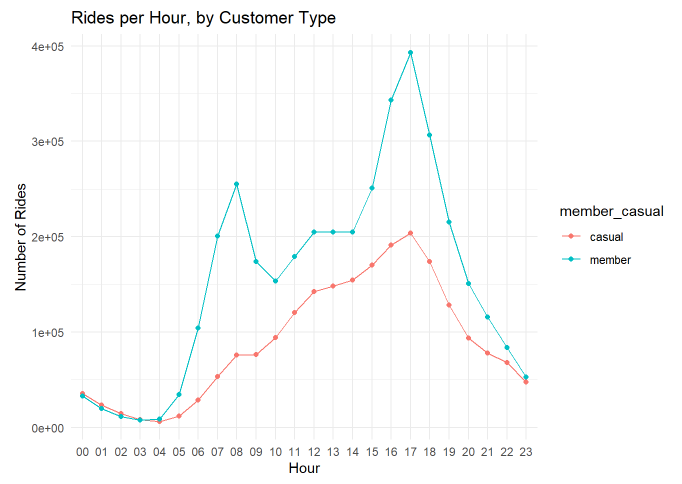 Rides per Hour (2024): Members show two peaks during commuting
hours, while casual riders peak in the late afternoon.
Rides per Hour (2024): Members show two peaks during commuting
hours, while casual riders peak in the late afternoon.
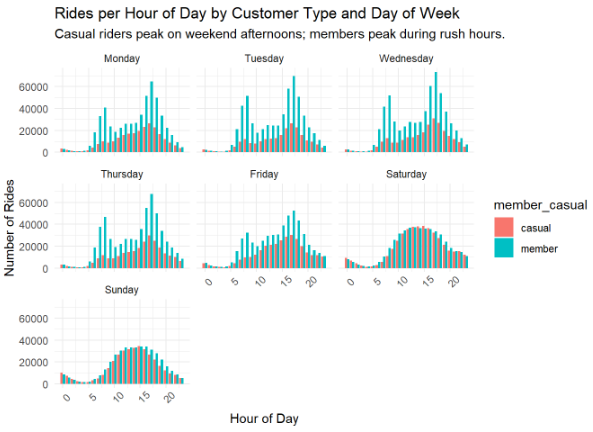 Rides by Hour & Day (2024): Members commute on weekdays;
casual riders increase on weekends, reflecting leisure
patterns.
Rides by Hour & Day (2024): Members commute on weekdays;
casual riders increase on weekends, reflecting leisure
patterns.
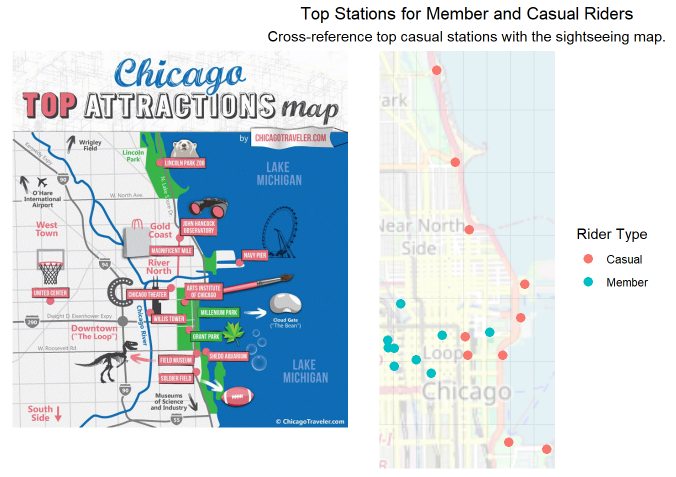 2019 Comparison Map: Casual rider hotspots align with Chicago’s
major tourist destinations and attractions, prime locations for
time-bound passes and seasonal promotions.
2019 Comparison Map: Casual rider hotspots align with Chicago’s
major tourist destinations and attractions, prime locations for
time-bound passes and seasonal promotions.
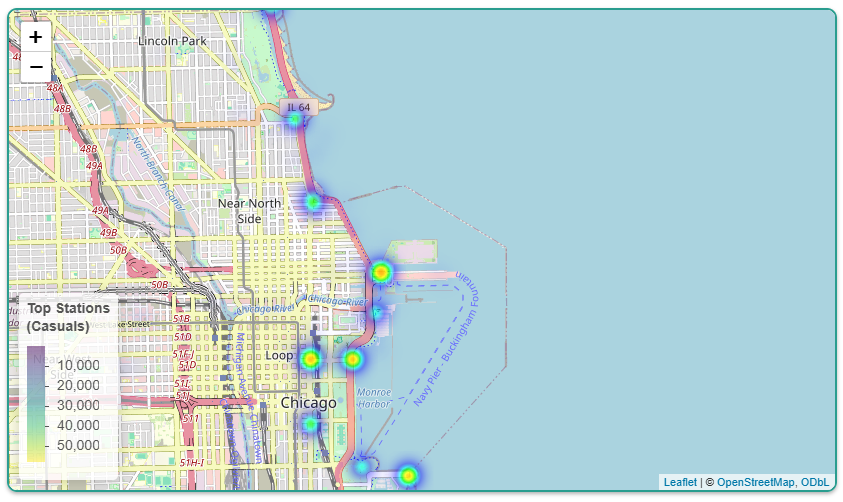 Casual Rider Stations (2024): High activity in neighborhoods near
the lakefront, parks, and cultural sites—Millennium Park, Museum
Campus, and Navy Pier.
Casual Rider Stations (2024): High activity in neighborhoods near
the lakefront, parks, and cultural sites—Millennium Park, Museum
Campus, and Navy Pier.
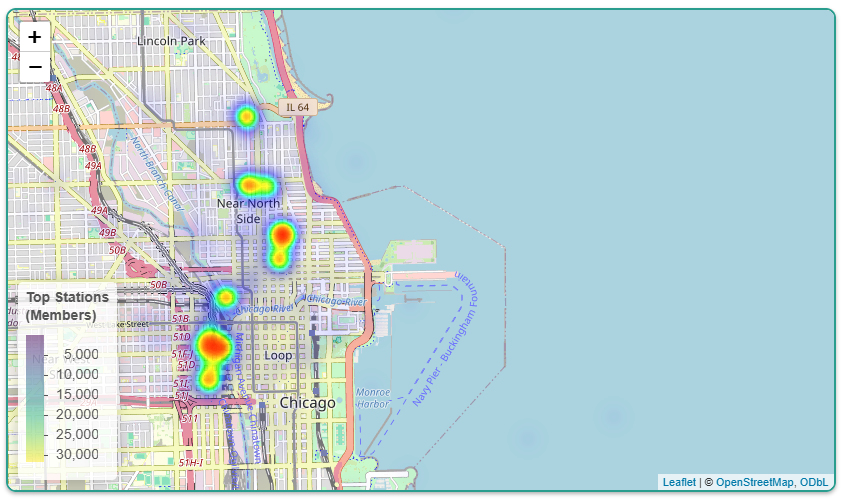 Member Stations (2024): Concentrated on The Loop and River North,
near transit hubs and dense commercial districts.
Member Stations (2024): Concentrated on The Loop and River North,
near transit hubs and dense commercial districts.
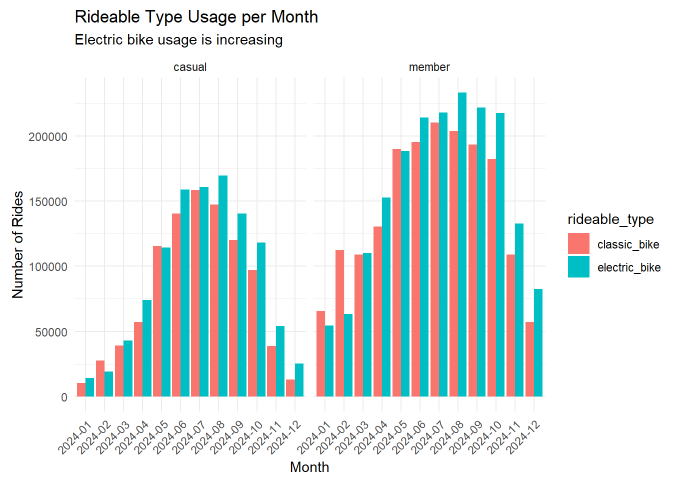 Rides by Bike Type & Month (2024): Electric bike usage is
rising. Overall ridership shows clear seasonal trends: higher in
summer, lower in winter.
Rides by Bike Type & Month (2024): Electric bike usage is
rising. Overall ridership shows clear seasonal trends: higher in
summer, lower in winter.
 AI-generated Cyclistic Logo: Branding for the project’s visual
identity.
AI-generated Cyclistic Logo: Branding for the project’s visual
identity.
References
Dataset provided by Google, from Lyft and Divvy's Chicago operations. The data has been made available by Motivate International Inc. under this license.